SUPPORT THIS BLOG BY CLICK AT ADVERTISEMENT

Wednesday, March 31, 2010

Satria Neo R3 Lotus:RM115 K Maybe 25 O.T.R

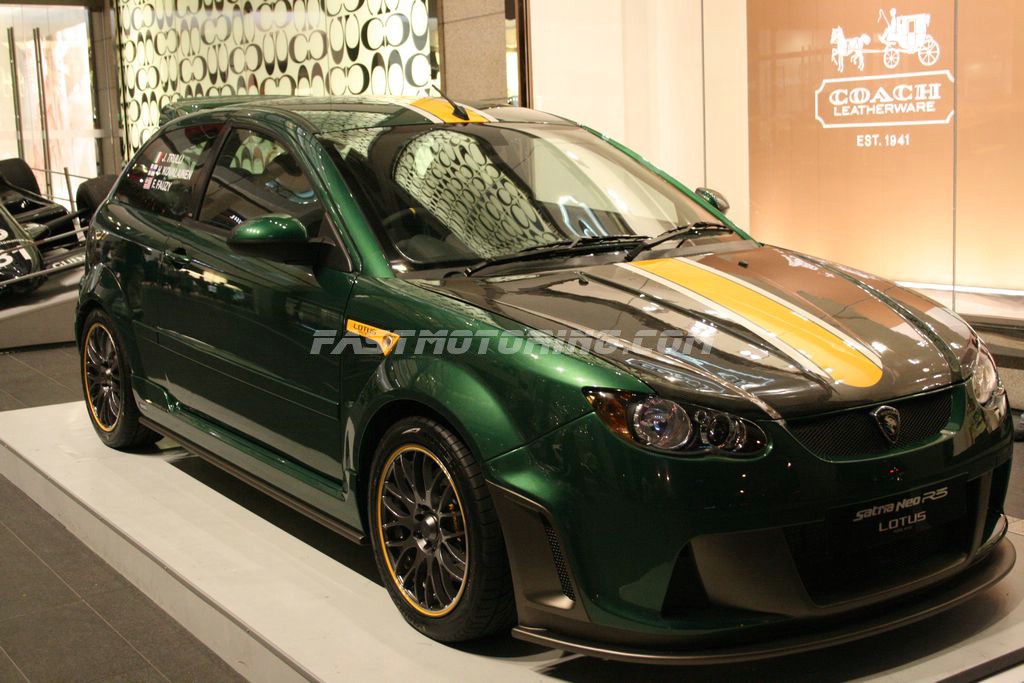
Proton Satria Neo R3 Lotus Racing edition with Tuned 1.6 Campro CPS engine by Race Rally Research (R3) – Proton’s tuning division uncovered. With upgrades about RM60,000 of equipments and tuning from a standard Proton Satria Neo CPS, this mean machine receive a 145 bhp and 168 Nm of torque from a 1.6 engine. Judging by this figure, it is impressive.
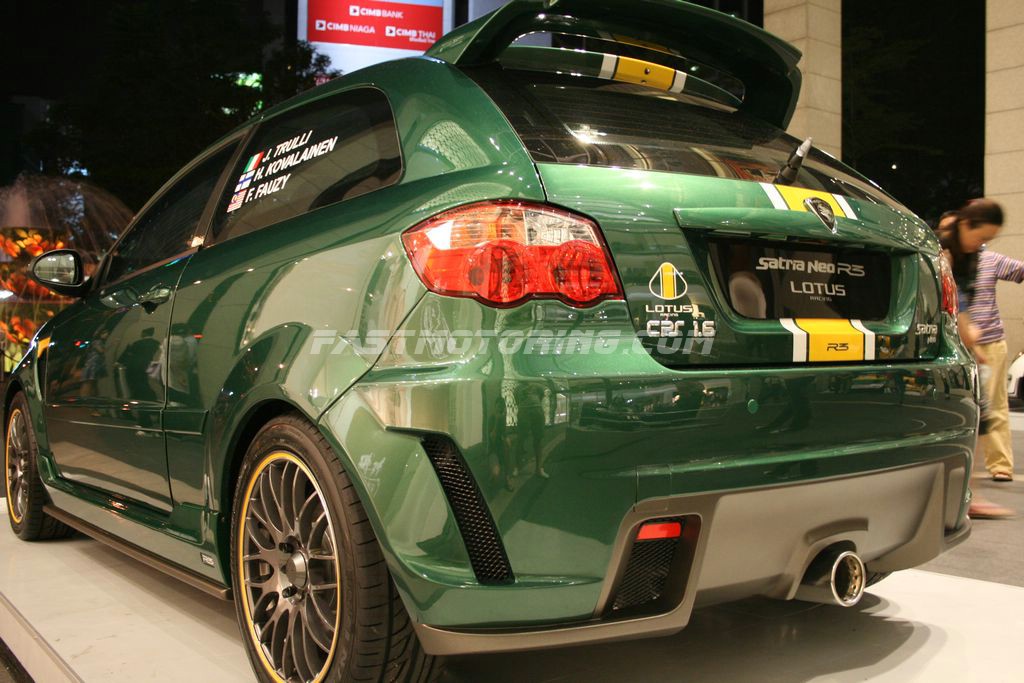
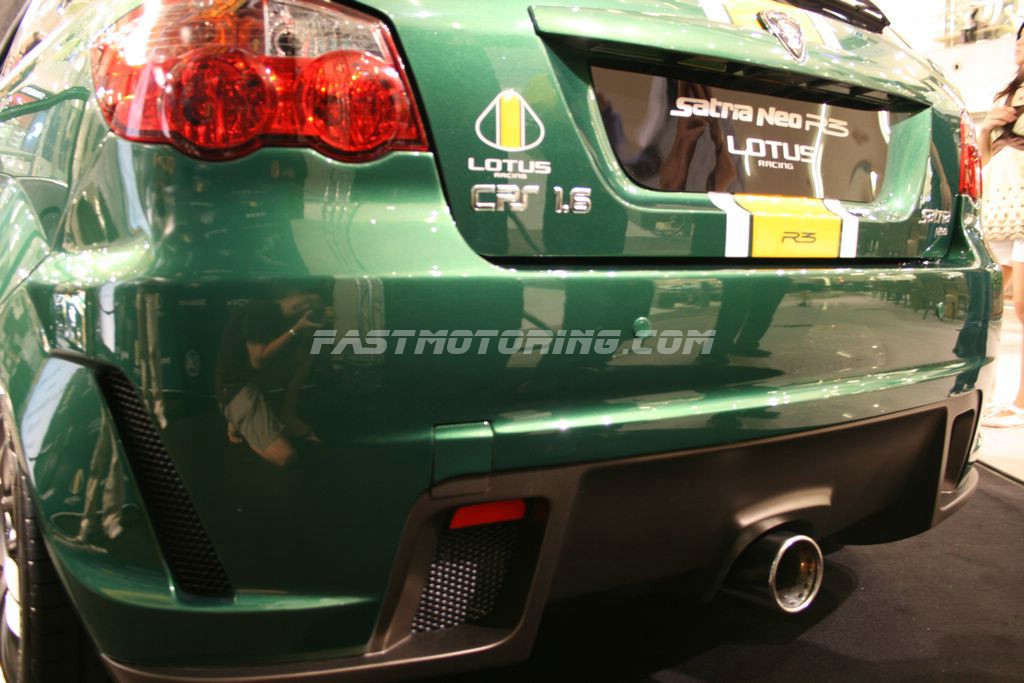
However Proton only able to claims 9.2 second on this Proton Satria Neo CPS R3 Lotus Racing Edition. Another highlight of this car would be – it costs RM115,000. Many would think this it’s too much to pay for a Satria Neo. Let me walk you through the upgrades that has been done. The Satria Neo R3 Lotus Racing edition looks some what fimilar from the Satria Neo R3, but Proton claims that claims it’s front back bumper are make with Race Proven FRP material and improved Aerodynamics.
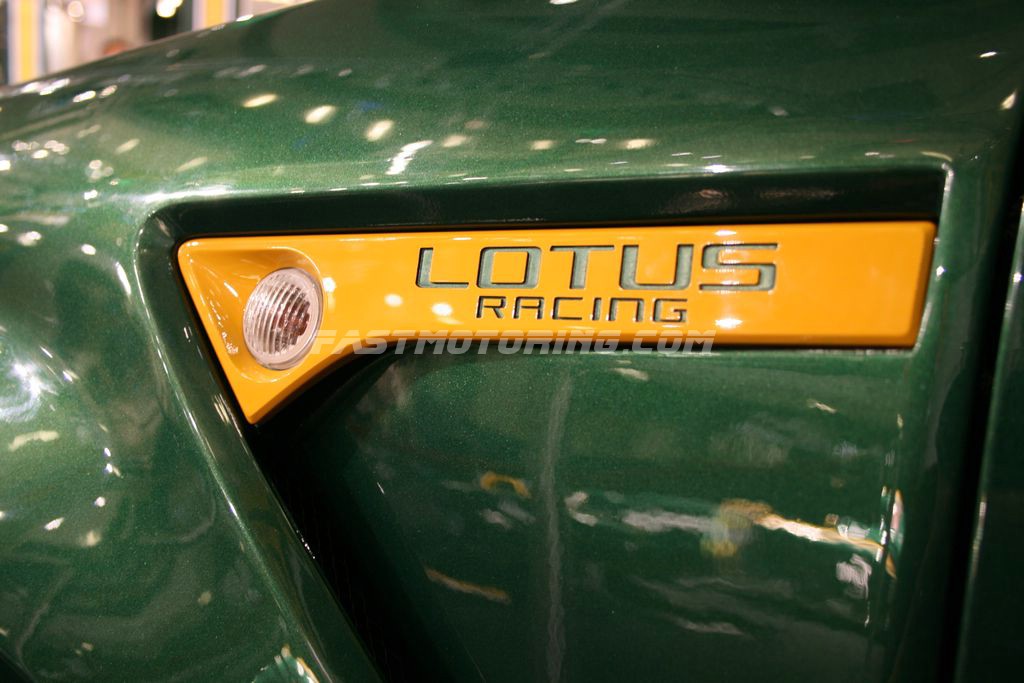
The Proton Satria Neo R3 Lotus Racing Edition is inspire by Lotus. Therefore, there’s only one colour available – which is Lotus’ Green. The car here, it’s also style with some sporty elements such as yellow racing stripes and carbon fiber materials all over the car. From the outlook, the most signification difference would the be widen fenders with air vents and a Lotus badge on it.
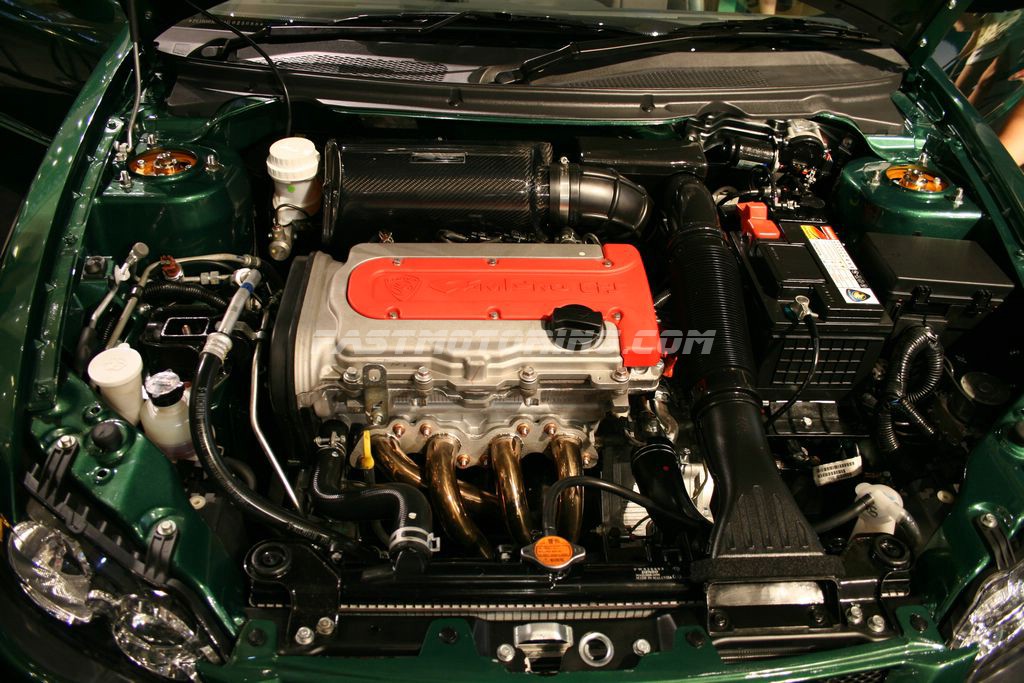
The heart of the Proton Satria Neo R3 Lotus Racing Edition is using the 1.6 Campro CPS which can be found on the conventional Satria Neo CPS. The displacement remained as 1597cc with maximum output of 145bhp @ 7,000rpm and torque of 168Nm @ 5,000rpm. This limited edition only comes with Manual Transmission.

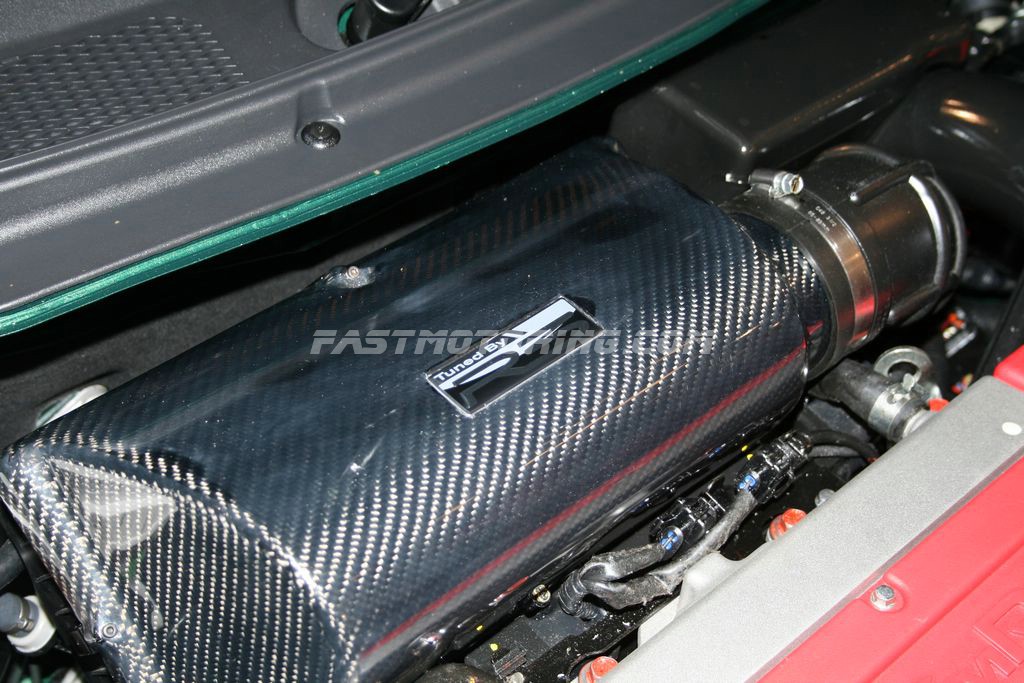
Mainly, the power train enhancements for the Lotus Racing Edition have added R3 Engine Management System, R3 Camshaft with Adjustable Alloy Cam, R3 Alloy under drive pulleys, R3 Titanium Manifold Extractor, R3 Tuned Exhaust System and R3 Carbon Fibre Air Intake with K&N Filter inside.
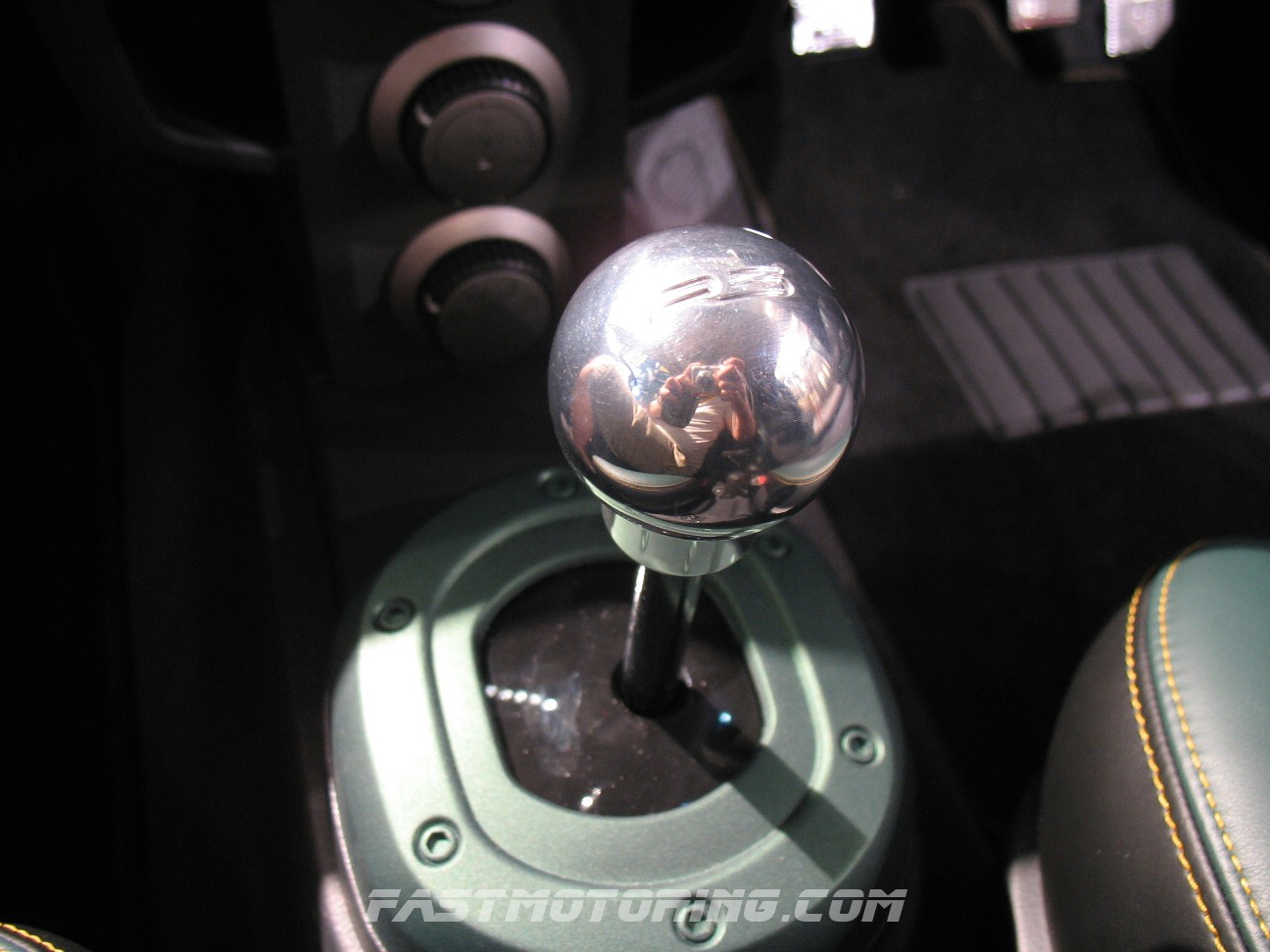
After a short chat with the R3 representative, he mentioned that the gearbox final gear ratio has been replaced with closer ratio gear for better acceleration which not listed on the brochure and the rest of the components besides the enhancements are similar to conventional Satria Neo CPS. Therefore, there will not be any problem getting an experienced mechanic to service and maintaining the car. Photo below shows R3 Aluminum Gear Knob.
The performance result was average at its class with no surprises of maximum speed of 200km/h and 0-100 km/h in 9.2secs. In fact, the Proton Satria GTi R3 that was introduced in late 2004 with 1.8L 4G93P perform even better with 0-100 km/h in 8.2secs and 140whp @ 6100rpm.
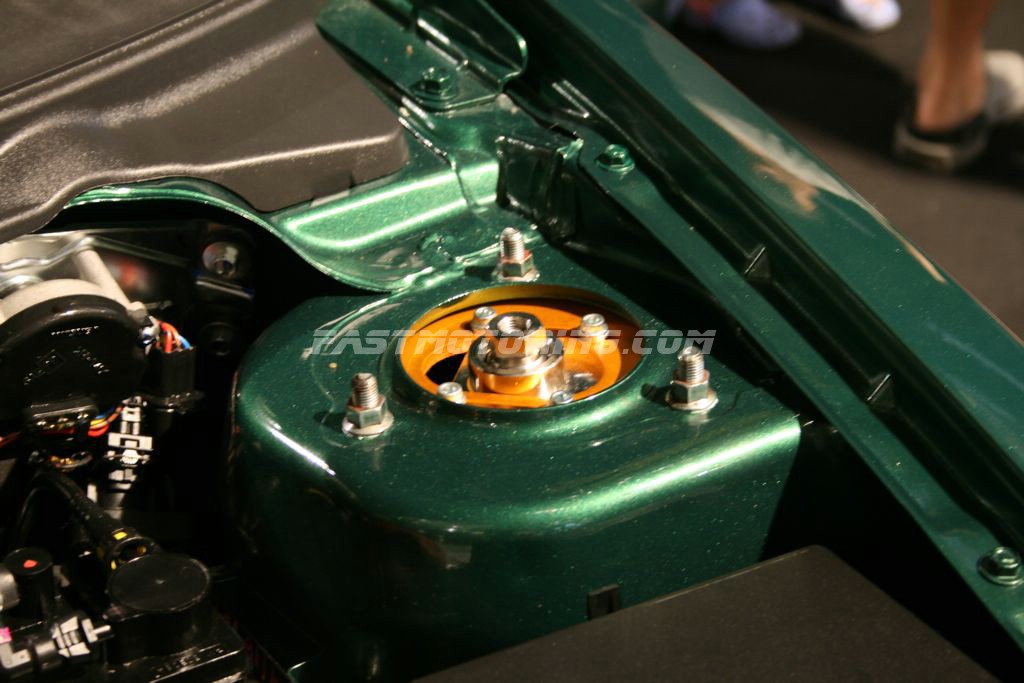
A set of Ohlins DFV (Dual Flow Valve) fully adjustable coil-over suspension with R3-tuned spring and damper rates are fitted to the car. The car benefits with lower ride height, stiffened rubber suspension bushes and revised suspension geometry. This allows the driver to have a better handling, more responsive steering feedback and better cornering precision.
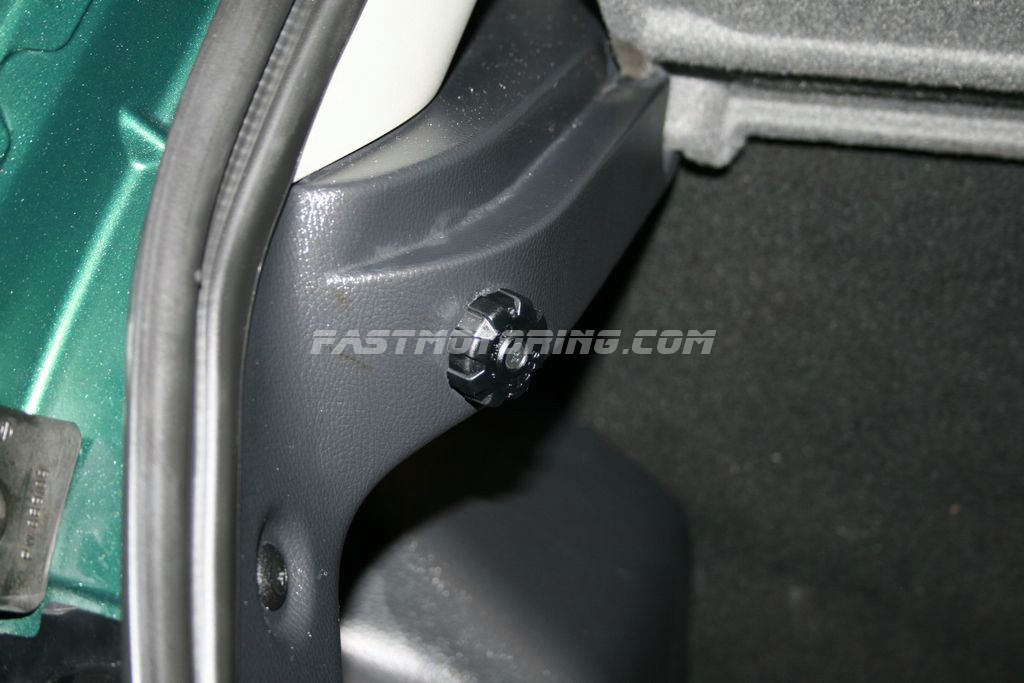
Pop-up the rear boot of the Satria Neo R3 Lotus Racing, and you will notice there’s a knob on side each for the car. The function it’s that to adjust the level of hardness of the rear suspension when it is needed.
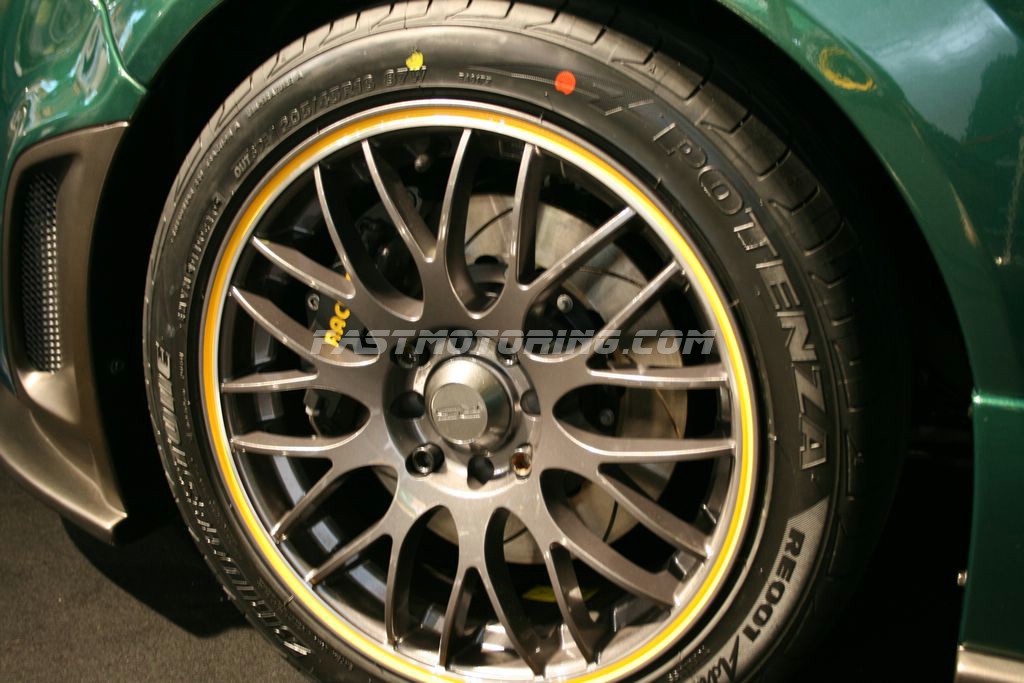
However, I doubt that it requires such a serious braking system but it comes with a massive 4-pot AP Racing calliper and cross ventilated discs for the front brakes. For the rear brakes, it remained as standard 1-pot with solid discs. The Satria Neo R3 Lotus Racing is also equipped with ABS and EBD. The rims of the Satria Neo here is a set 16″ OEM from Advanti and claims as R3 Light Weight Alloy rims.
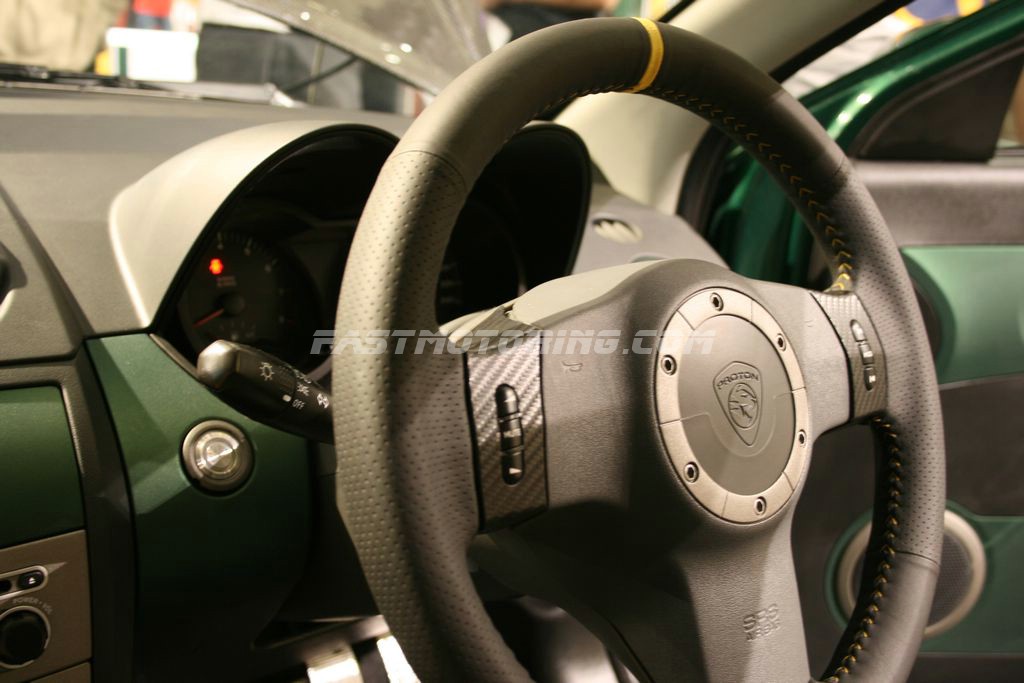
Aside from the performance upgrades, Proton has also done many upgrades on the cosmetic part. For example, a push-start button is installed along with the car but you will also need to insert your key to start the engine. The steering is wrapped with leather and with a yellow centered indicated.
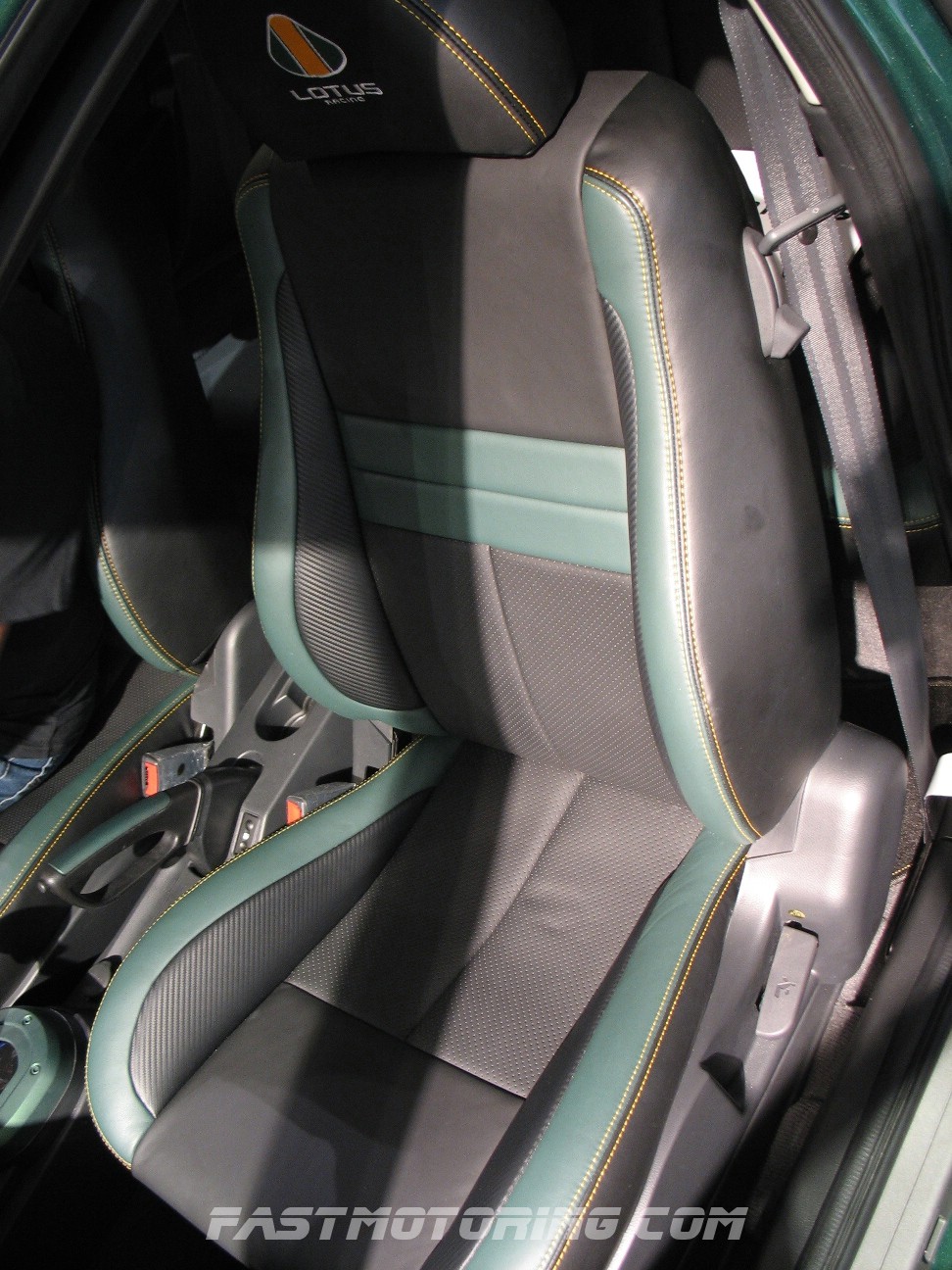
The seat of the Satria Neo R3 Lotus Racing edition is wrapped with Nappa Leather of course with styling inspired by Lotus and the Lotus Logo on the headrest. However as compared to the earlier version of Satria Neo R3, this unit here doesn’t have bucket seat. The seats are basically wrapped leather seats from the standard seats in any Satria Neo.
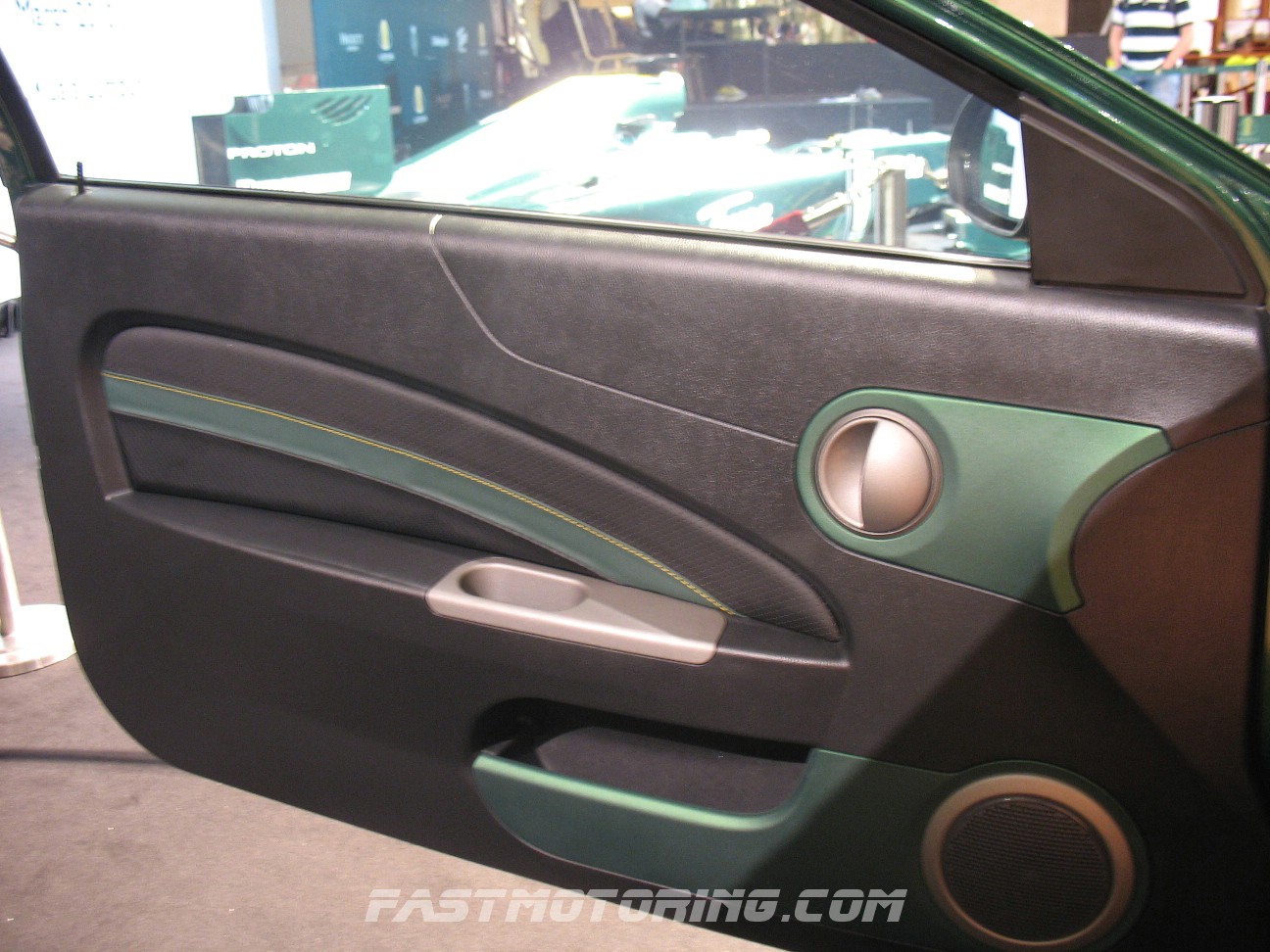
The door panel of this special edition Satria Neo it’s also redesign to suit the car’s theme.
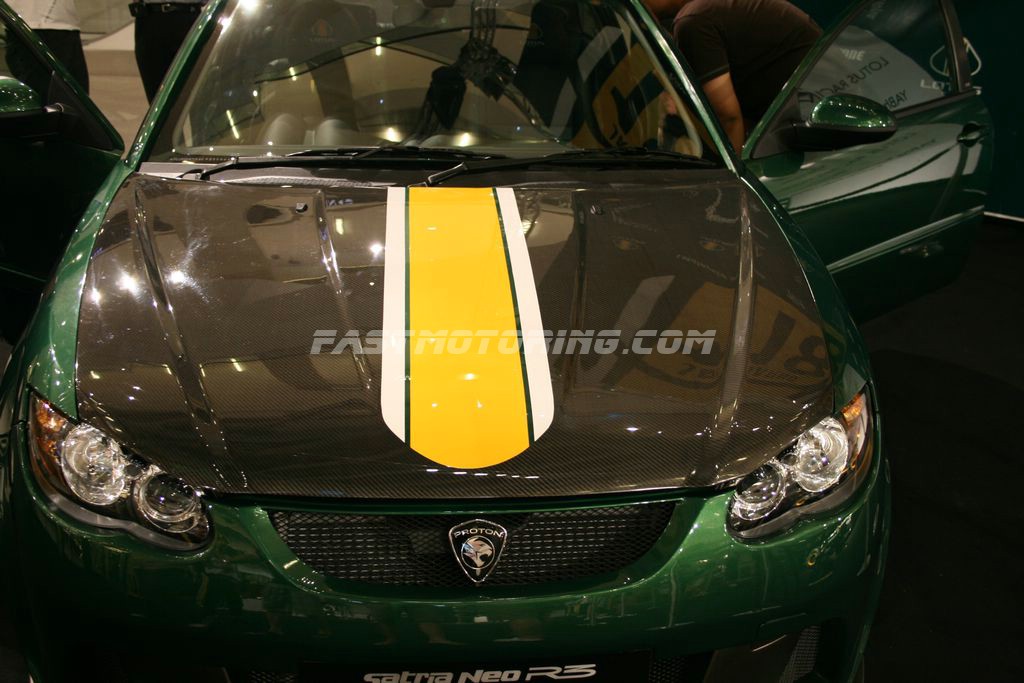
The Satria Neo R3 Lotus Racing car is fitted with few carbon fibre equipment to reduce weight and styling purposes. The bonnet here as the picture show is made with light-weight carbon fibre material.
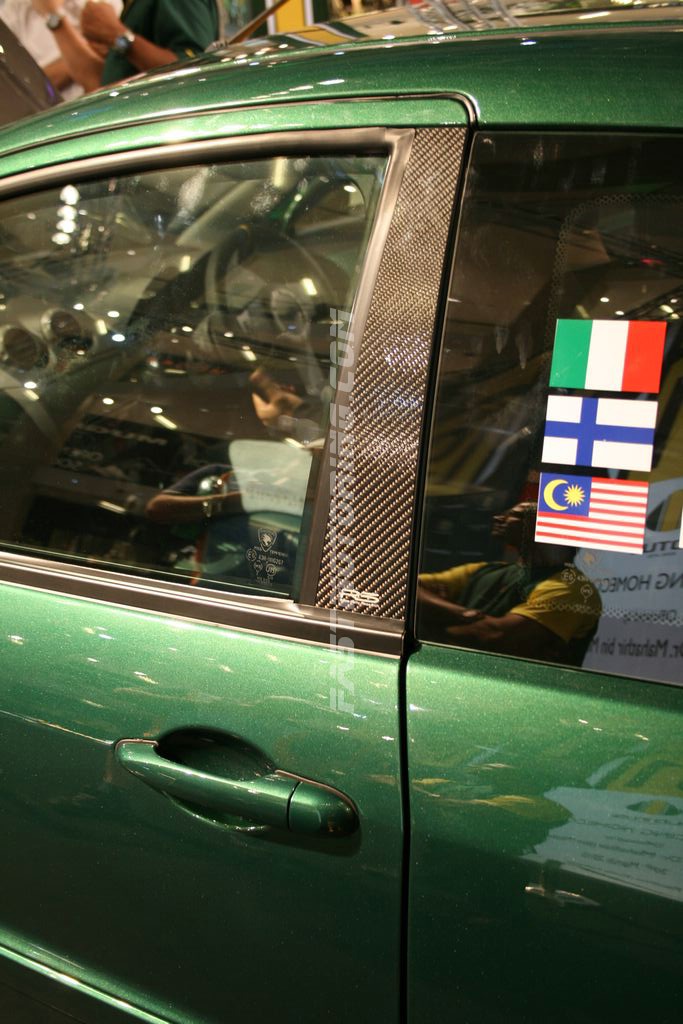
Asides, that the door still also fitted with carbon fibre material. We did a check on it whether it is carbon fibre or sticker, and yes it is real carbon fibre attach on the surface of the door frame.


All this while, the carbon fibre parts on the R3 are prone to theft. Many R3 owners resorted to removing these lightweight parts and replacing them with standard parts, refitting them only during track day or events.


Our sources say that 15 units are already booked for and remain 10 units up for sale as of 30 March 2010. One of the owner of this beautiful masterpiece belongs to the Proton Advisor, Tun Mahathir which he owned a collection of R3 in his garage.

Source:Fastmotoring

Monday, March 15, 2010

Moto Guzzi New Concept


• 2010 Moto Guzzi V12 X

Miguel Galluzzi and Pierre Terblanche capture the essence of Moto Guzzi and inject it into motorcycles to drool over, designed with one thing in mind: pure riding pleasure.

Miguel Galluzzi e Pierre Terblanche - two of the most brilliant motorcycle designers of all time - teamed up to present us with their styling exercises centred around the very essence of the Moto Guzzi brand - its legendary in-line twin-cylinder engine.

The V12 prototypes have been developed around the 1,200 cc 4-valve 90-degree V-twin from Mandello, so much so that they were even named after it.

This is Moto Guzzi's tribute to the one engine that turned the "Italian eagle" brand into a myth of motorcycling and to its unique character. It is a statement of Moto Guzzi's commitment to keep developing and improving its flagship engine for the years to come.

Pierre Terblanche's prototypes stand out for the minimalist design of the aluminium casting frame embracing that true masterpiece of mechanics. The frame compact dimensions make for a simple, neat layout. Tank, saddle and tail are integrated into a monocoque structure, an unconventional example of the fine art of design combining technology, style and practicality.

The overall impression is one of striking neatness, a sight unseen in the motorcycle industry: there is not a single cable left in sight, not a single off-key detail to be found. Such uncluttered appearance and compact size would simply be unthinkable without the sleek layout of the Guzzi twin-cylinder engine. Quite a paradox, if one considers the exuberant personality of this engine.

The V12 models are true to the Moto Guzzi tradition and its commitment to innovation that goes back nearly 9 decades.

Moto Guzzi is back to the quintessential Italian bike (so much so that all labels and indications are in Italian), a statement of style combined with technology. Rather than on performance for performance's sake, the focus is on showcasing the mechanics, on essential design, on the pleasure of owning a unique motorcycle and - of course - on riding fun, thanks to its eager engine and amazing chassis.

The prototypes feature innovative details and solutions, like the concept bikes they are. Noteworthy are the cutting-edge rear suspension of the V12 LeMans, the LCD "rear-view mirrors", the LED light units, the "suspended" passenger footpegs and the heat sinks.

1- MOTO GUZZI V12 LM: This is the Italian sports bike reinvented, true to the legacy of the legend of Le Mans it is named after. This bike is for those who want an exclusive motorcycle to ogle and to own for the utmost riding pleasure. The bike provides excellent performance under all riding conditions and easy rideability for all to enjoy. Like the other two versions, the V12 LM combines luxury details (height adjustment for top fairing and handlebar) with innovative, yet well-proven components.

2- Moto Guzzi V12 STRADA: This is the essential bike and the most versatile model in the V12 range. Perfect for everyday commuting, comfortable for two-up riding, with perfect naked ergonomics. The touring-style handlebar is matched by the generously sized tail fairing capable of accommodating a comfortable passenger saddle. The V12 Strada sports a range of technical solutions and aesthetic details built around the Moto Guzzi twin-cylinder engine, that would have been unthinkable with a conventional engine layout. The passenger footpegs are connected to the swingarm through a linkage system and look as if they were floating in air, enhancing that sleek, uncluttered look that is at the core of the styling concept.

3- Moto Guzzi V12 X: this is a "one-of-a-kind" motorcycle, true to the character of the Guzzi twin-cylinder. The focus is on riding fun, and is enhanced by its aggressive design. The V12 X is the motorcycle for aggressive riders that begs to be pushed to the limit. Born to show off and fun to ride, this motorcycle is in a category of its own. Its spirited personality is highlighted by the aggressive riding position, a sports-like chassis set-up, longer suspension travel and a rev happy engine.


Moto Guzzi V12 LM, V12 Strada and V12 X are three extraordinary Italian motorcycles. In the words of Miguel Galluzzi, Manager of the Piaggio Group styling centre:

"There is an impalpable, yet very real force in the history of Moto Guzzi. It lies in the ideas and in the unrelenting research work that led Moto Guzzi to build its tradition on innovation.

Mentioning all the accomplishments of Moto Guzzi and their significance in the history of the Italian motorcycling industry would seem like indulging in some kind of vain celebration. Throughout its history, Moto Guzzi has put forward a unique concept of motorcycle. Everything started with an idea, and new ideas have always been the lifeblood of the "Italian eagle".

New ideas once again mark a turning point in our history.

The prototypes showcased today are only the beginning: such unparalleled care for detail and neat design would be unthinkable without our twin-cylinder engine. Keep an eye on Moto Guzzi because this is just the first step. We are back to relying on ideas, and we have plenty of them. This is just the beginning".

Specifications

Engine 90° V-twin engine, 4 valves per cylinder
Engine capacity 1,151 cc
Max. power NA
Max. torque NA
Exhaust system 2 into 1 stainless steel exhaust with 3-way catalytic converter and oxygen sensor (Euro 3)
Gearbox 6-speed
Final drive Compact reactive cardan shaft drive system called CA.R.C.; double cardan joint and floating bevel gear seat

Source:totalmotorcycle

New KTM Offroad


• 2010 KTM 350 SX-F

Ready for take off - 350 SX-F Factory Racing

KTM is presenting a near series-ready, four-stroke motocross race motorcycle with 350 cm³ at the EICMA 2009 in Milan. With this move, the sports motorcycle specialists from Mattighofen, Austria define a completely new path in Motocross.

Motor Sports and Development
KTM lives and breathes 100% motorsport. This is completely evident when the KTM Motocross Factory Team transporter again docks at the factory in Mattighofen after a long race weekend. Team boss: No-one less than MX multi World Champion Stefan Everts. His commitment creates fantastic possibilities for the factory because he is able to perfectly dovetail development and motorsport and in doing so, assists in writing a new chapter in the long, tradition-rich history of the Austrian manufacturer’s significant success in Offroad sport. With all of his immense experience and enormous energy, the meticulous Belgian is driving a very special project, the results of which carry the stamp of the MX legend right down to the smallest detail as well as those of the powerful KTM genes. It is this symbiosis that carries the promise of something really special. It underlines KTM’s proven core competence in the area of Motocross and is being proudly presented to the public for the first time on the occasion of the EICMA in the form of the new 350 cm³ MX concept.

With this pilot project version of a completely new Motocrosser, KTM again demonstrates the courage and determination to leave the beaten path. Its benchmark data with 350 cm³, linkage and injection are based on a broadly applied, permanently ambitious development that is carried out always looking straight to the future. This is a radical new interpretation of an existing structure with a clear goal: maximum sporting success and enthusiastic customers!

Why 350cm³, injection and linkage?
When one observes KTM’s hugely successful 2009 Motocross season, it is hard to recognize any room for improvement. Marvin Musquin excelled in picking up the MX2 title with teammate Rui Goncalves close behind as MX2 vice world champion, Max Nagl triumphed as vice world champion in the MX1 class and Steffi Laier wrapped up the women’s world championship title. But it is exactly this success story that provides the fertile soil for KTM’s untiring will to advance – and this is exactly the vision of the KTM Factory Team – to continue to improve on their established strengths and at the same time to explore a whole new path. This is “Ready to Race” in the broadest possible context.

The future
A new concept does not however mean that KTM will place less importance on its traditional models – KTM is still READY FOR TAKE OFF governed by the will to win and the stop watch. Therefore for the 2010 season, the well known, newly presented 2010 models – the SX 250-F in MX2 and the SX450-F in MX1 will be in the starting lists. And, as in 2009, they will surely continue to celebrate great success in 2010. Meanwhile the “Project 350” continues to run at high pressure. With these moves, KTM’s traditional obligation to its customers remains completely valid: What the factory riders’ use on the track is always also available for sale.

Source:Totalmotorcycle


Friday, March 12, 2010

New Wish For Toyota

Photobucket

Toyota have launched the new Wish in the Japan market not too long ago, with a new front look. It comes either 1.8 or 2.0 variant. I guess the protruding concept is also being brought over to the Wish as well, as you can see the front headlights is like coming out of the body .

The new Wish is fitted with the new generation engine with “Valvematic” technology, i guess they renamed VVTL-i to this name, since the technology is variable valve and lift.

Photobucket

The interior looks great, with the triangular window at the side so that you have more view of the road.

This baby also comes with Super CVT-i transmission which gives better fuel economy. Also mentioned is that the 1.8L gives 16Km/L while the 2.0L gives 15.2Km/L. I would say these are pretty impressive figures for the MPV class.

Also available is an Eco Drive mode, i guess in this mode the ECU optimizes the alignment of the driving force with the accelerator operation to offer better fuel economy.

The 1.8L makes about 142 HP with 176 Nm of torque while the 2.0L makes out 156HP with 196Nm of torque.

Photobucket


Photobucket

Well a Wish does not cut it for a family car or a performance car. Where does it sit, calling it an MPV is really an understatement coz the boot space is really disappointing. For that price i rather save up more for a Toyota Caldina, you will get the same boot space, around the same amount of room in the car but faster! It looks cooler too.

Source:dailytorque

Wednesday, March 3, 2010

Proton Concept Car - E.M.A.S

GENEVA: Malaysia’s first global car Emas (pic, above) is expected to mark the birth of a golden era for Proton, the national car maker.

The concept version of the car, shown in three variants, was launched at the Geneva Inter­national Motor Show yesterday by Proton adviser Tun Dr Mahathir Mohamad. Production by 2012.

“This is Proton’s 25th year and we want to tell the world that Proton is now ready to be a global player,” he said, adding that Proton was willing to invest in strategic partnerships to drive this new direction for the company.

“I’ve told the Proton people that I’d like to see the car out in a year, but they say they need more time,” Dr Mahathir said.

He said the project represented a giant techonogical leap for Proton, which previously focused on the local market.

Proton group managing director Datuk Syed Zainal Abidin Syed Mohamed Tahir, who was also at the launch, said they would need between 17 and 24 months to get the car into production.

Moving ahead: Proton adviser Tun Dr Mahathir Mohamad posing beside the Emas with Proton Holdings Berhad chairman Datuk Mohd Nadzmi Mohd Salleh and group managing director Datuk Haji Syed Zainal Abidin Syed Mohamed Tahir (left) as the car was launched at the 80th Geneva Motorshow. -Bernama

“We are thankful and humbled that this is happening as we celebrate our 25th anniversary. We will certainly use this opportunity to reach out and build our brand further in the global market,” he added.

Emas, an acronym for Eco Mobility Advance Solution, was designed in collaboration with acclaimed Italian design house Italdesign Giugiaro.

“This is a car for today, with a design for tomorrow,” said Italdesign Giugiaro co-chairman Fabrizio Giugiaro at the launch.

“We don’t want to call it a concept car, rather, this is a new concept for a car,” he added.

Source:The Star Online

Thursday, February 11, 2010

2010 Honda Crosstour 4wd


The first crossovers borrowed their boxy styling from traditional SUVs. But a growing trend to meld coupe-like styling into the genre is exemplified in the 2010 Honda Accord Crosstour.

Active hobbies and adult children still living at home are the reasons behind the surge of crossovers.

As children leave home, empty-nesters generally trade in minivans for stylish coupes and convertibles. But some adult children of boomers are delaying their departure from home, while their parents aren't about to delay their active pursuits. Coupe-like crossovers assuage their desire for style while satisfying their need to carry people and cargo.

The Crosstour is marginally longer, wider, taller and heavier than the Honda Accord, on which it is based. The biggest difference, though, is in total cargo volume. Thanks to a high back, the Crosstour can swallow 728 litres of cargo, compared with 397 for the Accord sedan.

While a high hatch lid aids aerodynamics and cargo capacity, it results in a back window that is almost horizontal. The view from the driver's seat is like looking down a narrow tunnel and visibility is only fair, despite a second window being fitted under the rear spoiler. The rear pillar is also large, creating a blind spot.

We drove the top-of-the-line Crosstour with the navigation package, which includes a back-up camera -- a welcome feature given the visibility challenge. It should be standard on all Crosstours, with the image projected on the rear mirror, like some competitors.

The cargo area is well thought out, with a waterproof bin under the floor and panels that can be flipped over -- carpet on one side, plastic on the other. The hatch itself is large, with a cargo cover built-in. It would have been even more attractive if it was powered. Be aware that the trunk floor is a bit higher, which means more lifting of groceries and other cargo. The back seats, which are split 60/40, can be folded flat remotely using levers in the trunk.

Up front, the driver and front passenger are greeted with faux wood and a well-executed dash. Our car had a multi-function screen, displaying the navigation, audio and other controls, controlled by a large rotary knob located under a very small audio knob.


I could not find an instantaneous/average fuel consumption screen; instead a green ECO light on the dash came on whenever I was light with my right foot. But maybe that's just me.

Leg and headroom is about the same as the Accord sedan. The sunroof seems small, especially after seeing the offerings from competitors such as the Subaru Forester. A larger glass roof would have helped lighten up the cabin.

The centre armrest has power and USB and audio-in sockets, but parents travelling with kids should note that there are no power outlets for back-seat passengers.

The steering wheel controls come with Bluetooth, a hands-free phone interface and voice recognition. The navigation system is satellite-linked.

The 3.5-litre V-6 is the only engine available on the Crosstour. It features cylinder deactivation, with the computer switching from running on six, four and even three cylinders depending on engine load. If this feature came into play during my time with the Crosstour, it was seamless and undetectable. Fuel consumption is decent, at 12.3 litres per 100 kilometres in the city and eight on the highway.

A five-speed automatic transmission is standard equipment. I guess Honda figured people who choose the Crosstour aren't the sporty type, as they did not include a manual mode on the transmission.

The Crosstour can be ordered as a two-wheel-drive but I have been told this is a low-production model, as Honda expects to sell most of the vehicles equipped with four-wheel-drive. Keep in mind that while Honda calls its system 4WD, it is essentially a sophisticated front-wheel-drive system that normally operates in two-wheel-drive and only switches to driving all four wheels when it detects slippage. It has no low and high setting and the differential cannot be manually locked. It's similar in operation to the system found in the CR-V.


Unlike the rest of the Accord line, there is only one trim level -- the top-of-the-line EX-L. Because of this the standard equipment list is extensive, with features such as two memory position eight-way power leather seats, dual-zone climate control, 18-inch alloy wheels, six-disc CD audio system with subwoofer and others. The navigation system is available only on the 4WD model.

Safety comes in the form of electronic brake distribution and brake assist, traction and stability control. It comes with the usual number of front, side and side curtain air-bags.

The crossover market has been the only bright light for automakers in the last year. The mid-sized 2010 Honda Crosstour joins the growing number of crossovers being introduced by automakers around the world. As the segment grows crowded, Honda has wisely chosen to differentiate its offering with coupe-like styling while retaining the practicality the market demands.

THE SPEC SHEET

Type: Midsize crossover, front-engine, part-time four-wheel-drive

Engine: 3.5-litre V-6, generating 271 h.p. at 6,200 r.p.m., 254 lb.-ft. of torque at 5,000 r.p.m.

Transmission: Five-speed automatic, cam-driven four-wheel-drive system

Dimensions (mm): Length, 4,999; width, 1,898; height, 1,670; wheelbase, 2,797

Curb weight (kg): 1,845

Source:Honda News


Tuesday, February 9, 2010

2010 Suzuki Hayabusa


Ever since we introduced the Suzuki Hayabusa, it's had only one competitor: Itself. That's why the 2010 Hayabusa is so impressive - compared to the original, it's hotter than ever.

For enthusiasts, that comparison will make your heart pound. The Hayabusa's engine is thoroughly updated from the previous model for more power and an improved power-to-weight ratio, which you'll experience as an even greater rush of acceleration.

Its refined chassis and suspension help provide crisper handling. And its striking fairing offers sleeker aerodynamics. The original Hayabusa was the best. With the 2010 Hayabusa, you're looking at better than the best.


Key Features

1340cc - 1340cc, DOHC liquid-cooled engine with 16-valves, Twin Swirl Combustion Chambers provides 11% higher performance and smoother operation

Front ForksFront Forks - Fully adjustable inverted front fork featuring DLC coated inner tubes for minimal friction resistance and outstanding suspension performance over a variety of riding conditions

Instrument cluster features four analog meters for speedometer, tachometer, fuel gauge and water temperature with a S-DMS mode indicator, gear position indicator and adjustable engine rpm indicator

LED taillight utilizes a double lens structure with a clear inner lens and a red outer lens for maximum visibility and a high quality finish

Radial-mount front brake calipers for maximum braking performance and allows for smaller 310mm front brake rotors resulting in reduced unsprung weight and improved handling

S-DMS (Suzuki Drive Mode Selector) allows the rider to choose from three different engine settings depending on riding conditions or rider preferences

Suzuki SDTV fuel injection system with dual injectors per cylinder and ram air intake with large volume airbox

Vertically stacked twin headlights provide increased light intensity, improved light distribution and match the elegant flow of the new Hayabusa styling

Engine Features

1340cc, DOHC liquid-cooled engine with 16-valves, Twin Swirl Combustion Chambers provides 11% higher performance and smoother operation

High efficiency curved radiator now features dual electric fans controlled by the ECM for increased cooling capacity. Oil cooler now has 10 rows cores for increased heat dissipation

Ion plating treatment utilizing PVD (physical vapor deposit) method is applied to piston rings providing a smoother surface treatment for increased durability, reduced friction loss and reduced oil consumption

Large volume 4-2-1-2 exhaust system with a large capacity catalyzer, dual triangular canisters and closed loop system that meets Euro 3 and Tier 2 regulations

Lightweight aluminum alloy pistons feature a revised shape and a higher compression ratio of 12.5:1 for maximum performance in all conditions

Lightweight titanium intake and exhaust valves with narrow 14 degree valve angle for high combustion chamber efficiency

SCEM (Suzuki Composite Electro-chemical Material) plated cylinders minimize cylinder size and improve heat dissipation and new hydraulic cam chain tensioner for reduced mechanical noise

S-DMS (Suzuki Drive Mode Selector) allows the rider to choose from three different engine settings depending on riding conditions or rider preferences

Shot-peened chrome-moly steel connecting rods for maximum durability

Slick shifting 6 speed transmission working in conjunction with an innovative back torque limiting clutch for smooth and controlled downshifts

Suzuki SDTV fuel injection system with dual injectors per cylinder and ram air intake with large volume airbox

Ventilation holes at the cylinder skirt for reduced pumping losses and increased performance

Chassis Features

Aggressive aerodynamic fairing design with low drag coefficient retains it's signature Hayabusa look and features a muscular look to work with the amazingly powerful engine and cutting edge chassis

Bridged aluminum alloy swingarm features a cross-sectional shape for increased rigidity and to cope with improved rear tire grip and increased engine output


Fuel tank height is lowered to allow riders helmet to tuck in and windscreen height is increased for improved wind protection and optimum aerodynamic efficiency with the rider in place

Fully adjustable inverted front fork featuring DLC coated inner tubes for minimal friction resistance and outstanding suspension performance over a variety of riding conditions

Fully adjustable rear shock absorber with a 43mm piston and 14mm rod diameter Lightweight and rigid twin-spar aluminum frame minimizes weight while maintaining high torsional strength

Instrument cluster features four analog meters for speedometer, tachometer, fuel gauge and water temperature with a S-DMS mode indicator, gear position indicator and adjustable engine rpm indicator

LED taillight utilizes a double lens structure with a clear inner lens and a red outer lens for maximum visibility and a high quality finish

Lightweight single piston rear brake caliper working in conjunction with a new larger 260mm rear brake disc

Passenger seat and rear subframe are lowered for improved passenger comfort

Radial-mount front brake calipers for maximum braking performance and allows for smaller 310mm front brake rotors resulting in reduced unsprung weight and improved handling

Vertically stacked twin headlights provide increased light intensity, improved light distribution and match the elegant flow of the new Hayabusa styling

Wheels mounted with high performance Bridgestone BT-015 tires for unmatched handling and control

Source:TotalMotorcycle
Related Posts with Thumbnails